Latent
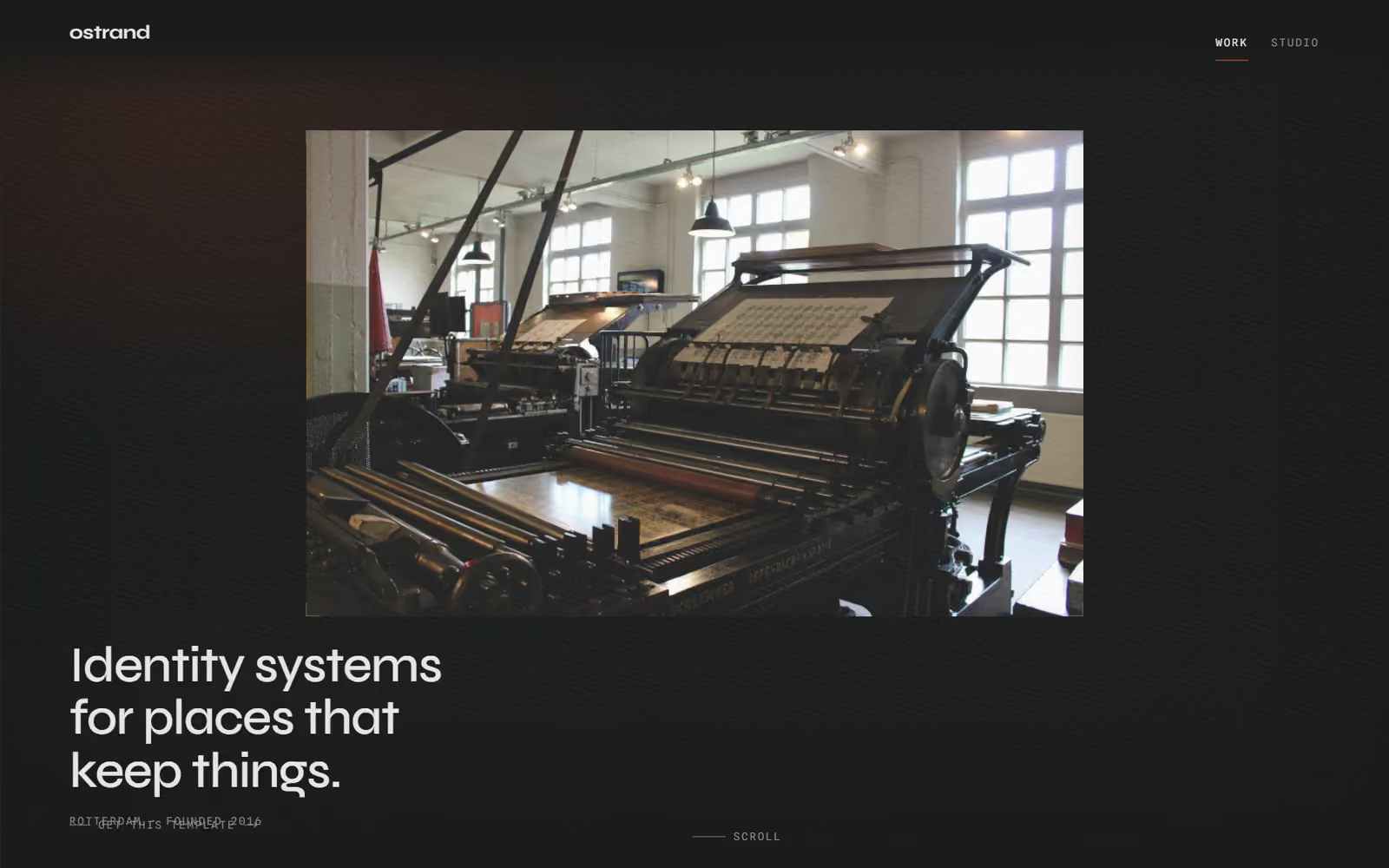
A studio site built round one WebGL frame that never empties and never cuts: a project opens by changing the page around the picture.
About Latent
What it is
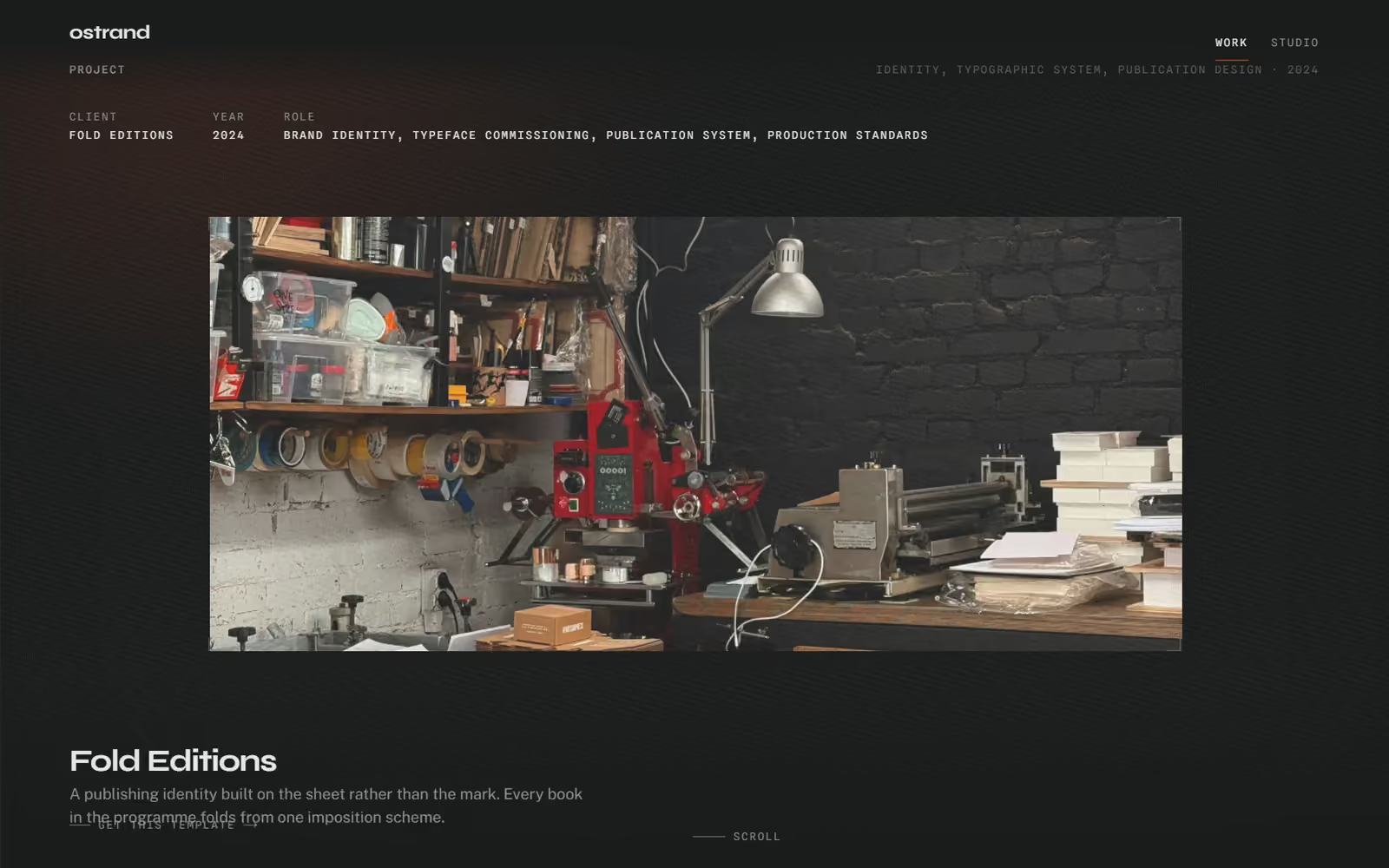
Latent is a website for a studio or an agency. There is a single frame in the middle of the screen. It holds the studio's work, and scrolling turns over what is inside it. Click a project and the page does not transition: the chrome around the frame becomes a case study while the frame stays where it is, still holding a picture.
It is built that way, and no animation is imitating it. The canvas is mounted in the root layout and never unmounts, so nothing blinks in the middle of the change.
What you change
Five files: the studio's details, the projects, six colour tokens and three fonts. Then you drop your photography into a folder and run one command, which resizes everything, writes the blur placeholders and tells you if a picture is over its size budget.
You touch nothing in the aperture engine, the ambient shader or the scroll choreography.
What is measured
62 unit tests. The gate in the download crops the frame out of a screenshot and measures whether there is a photograph inside it, at five scroll positions, on every route, at four viewports and in both motion modes. It exists because an earlier version of it passed a build whose frame was empty.
Every colour in the palette has its measured contrast ratio written beside it. Every route also carries the current plate as a real image with alt text, for screen readers and for anyone without WebGL.
What it does not do
It has no backend, no CMS, no database and no shop. The contact form is accessible and validates, and wiring it to an inbox is your call. Under reduced motion the aperture cuts between plates, the grain freezes and nothing pins.
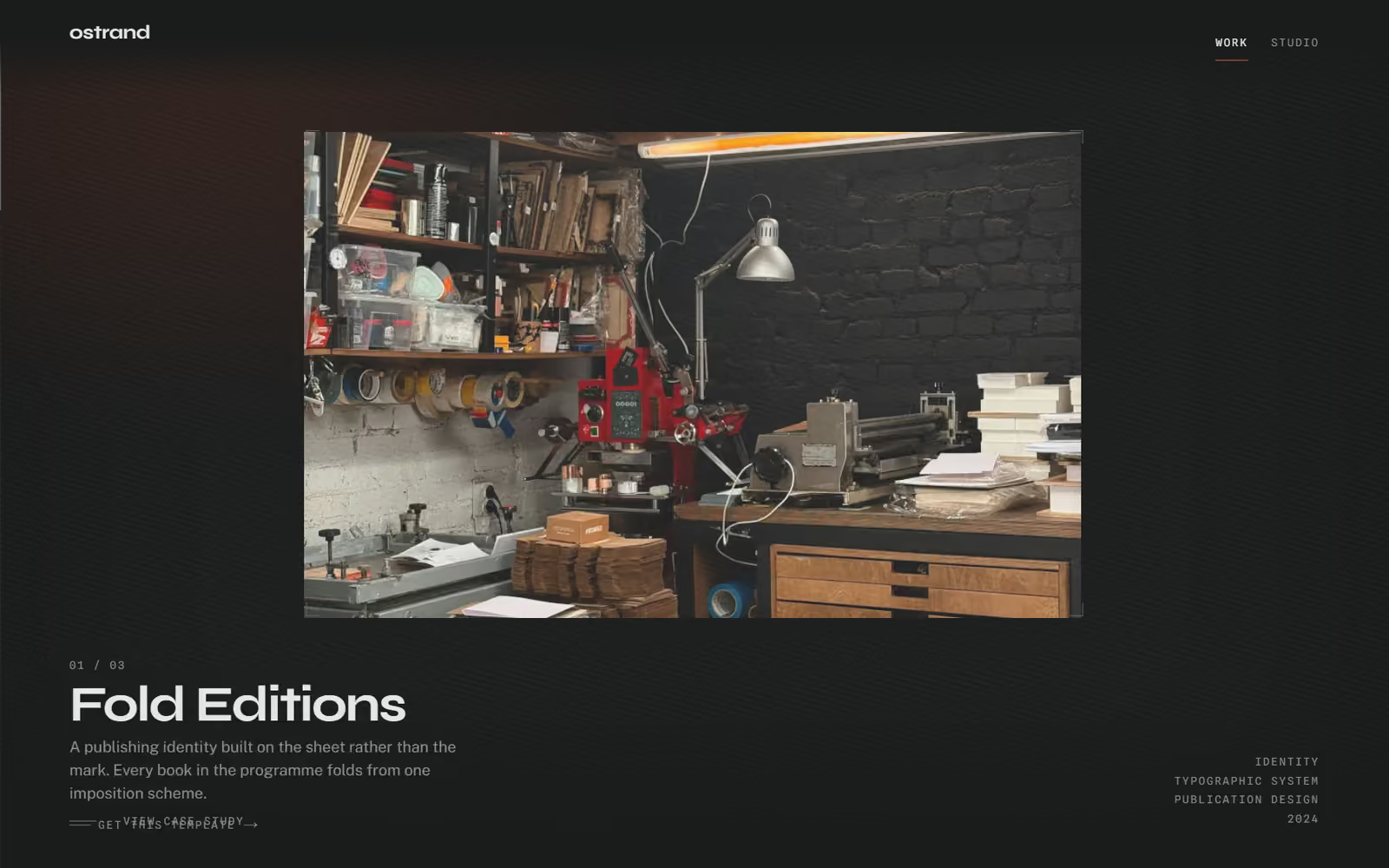
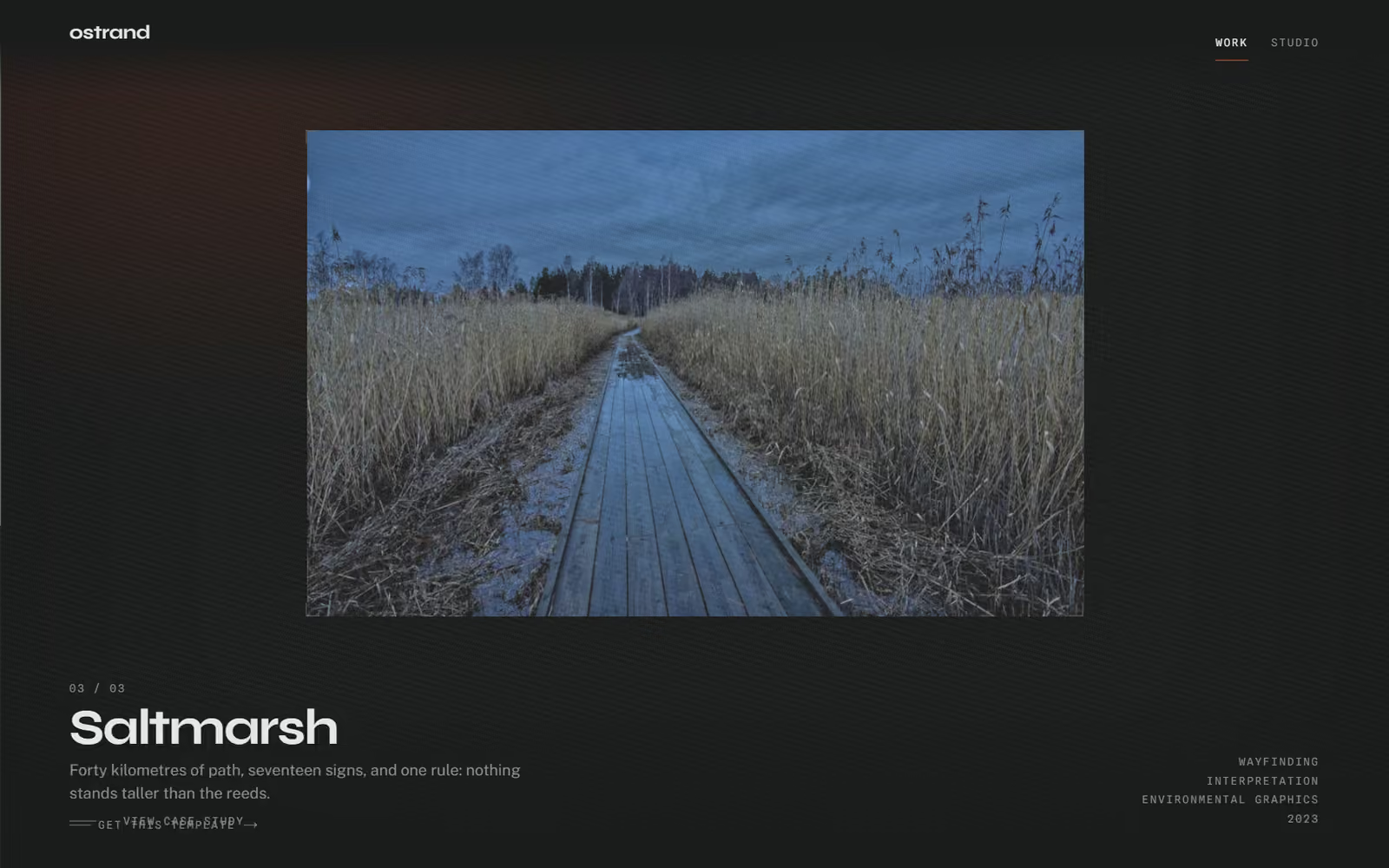
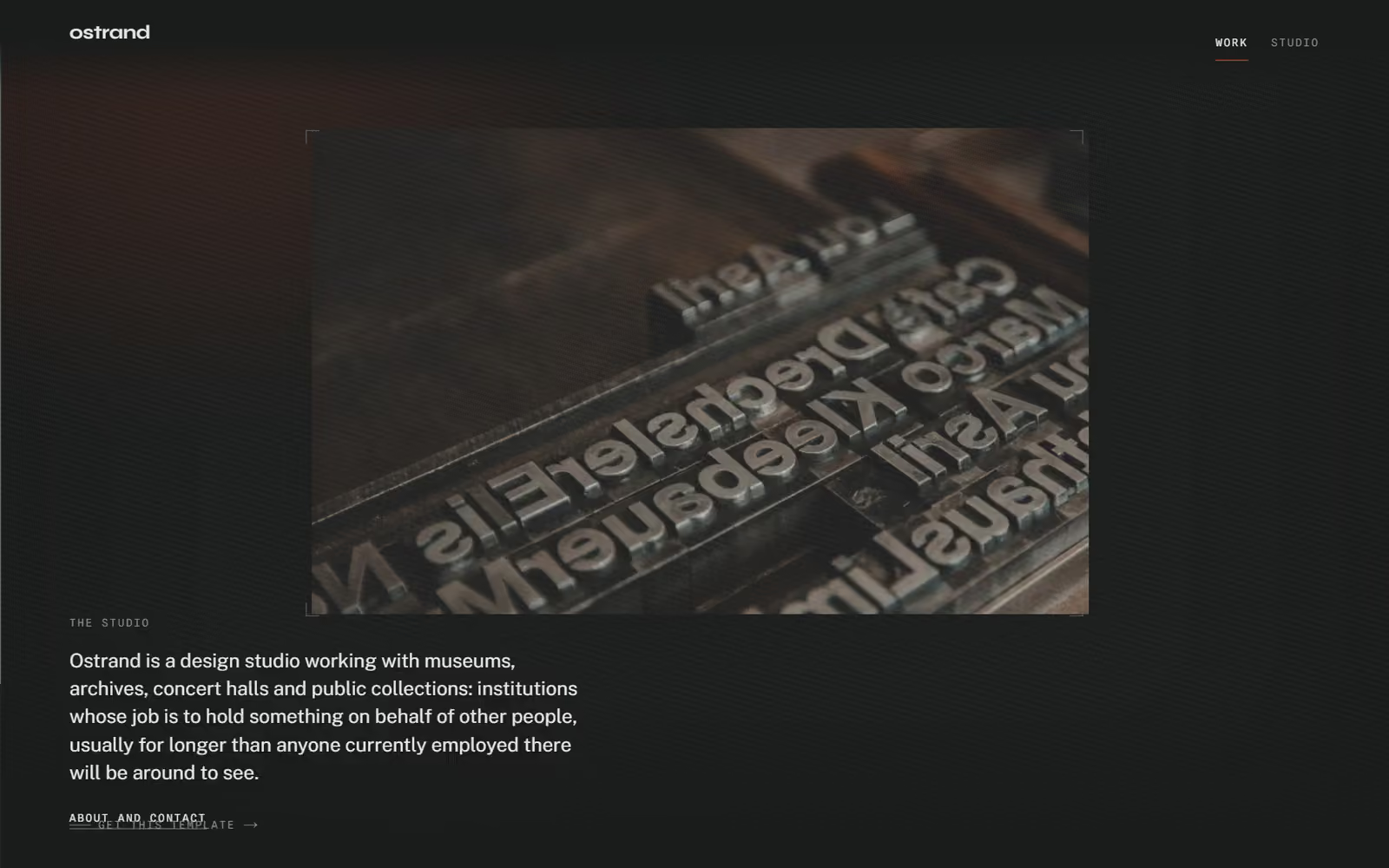
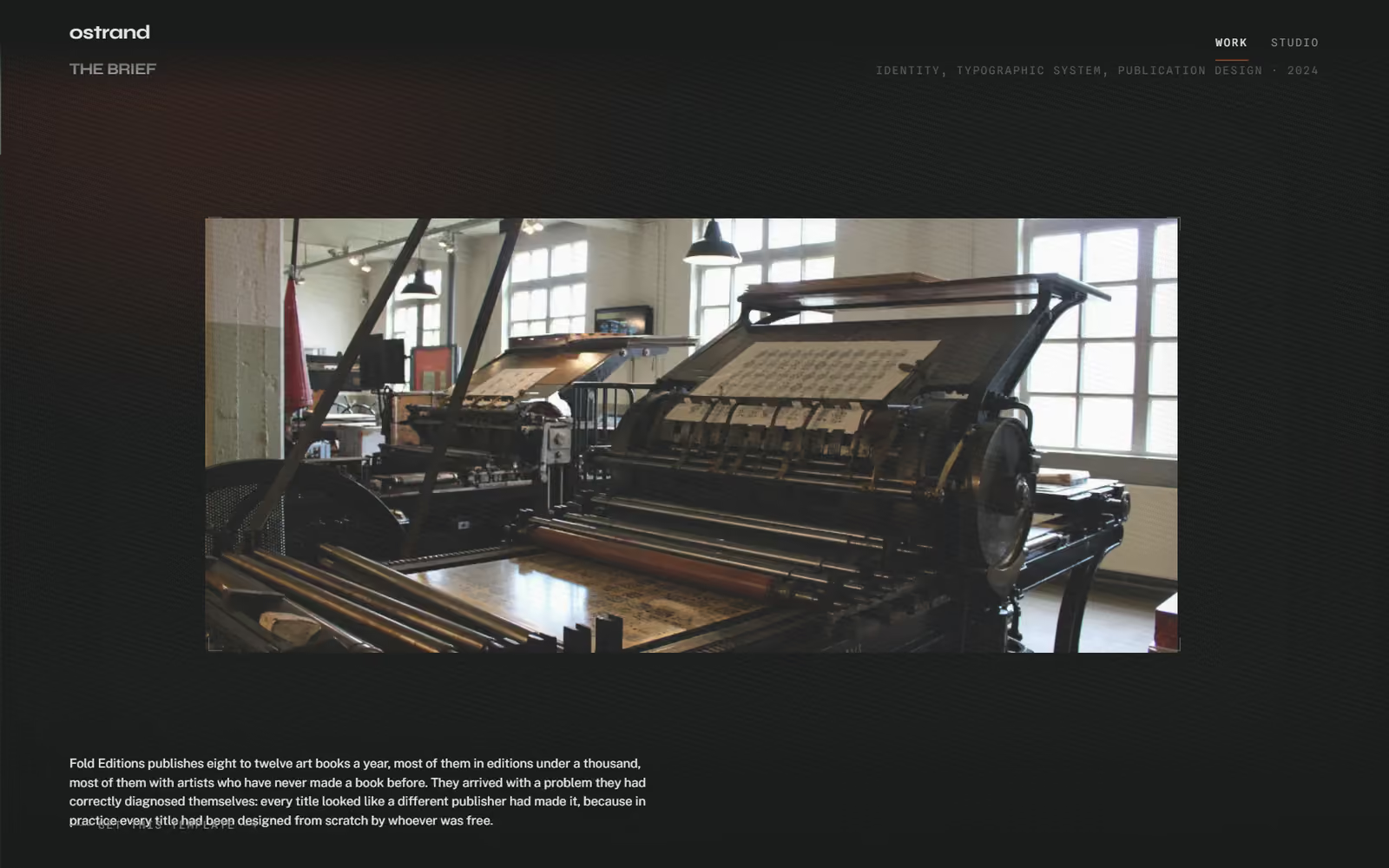
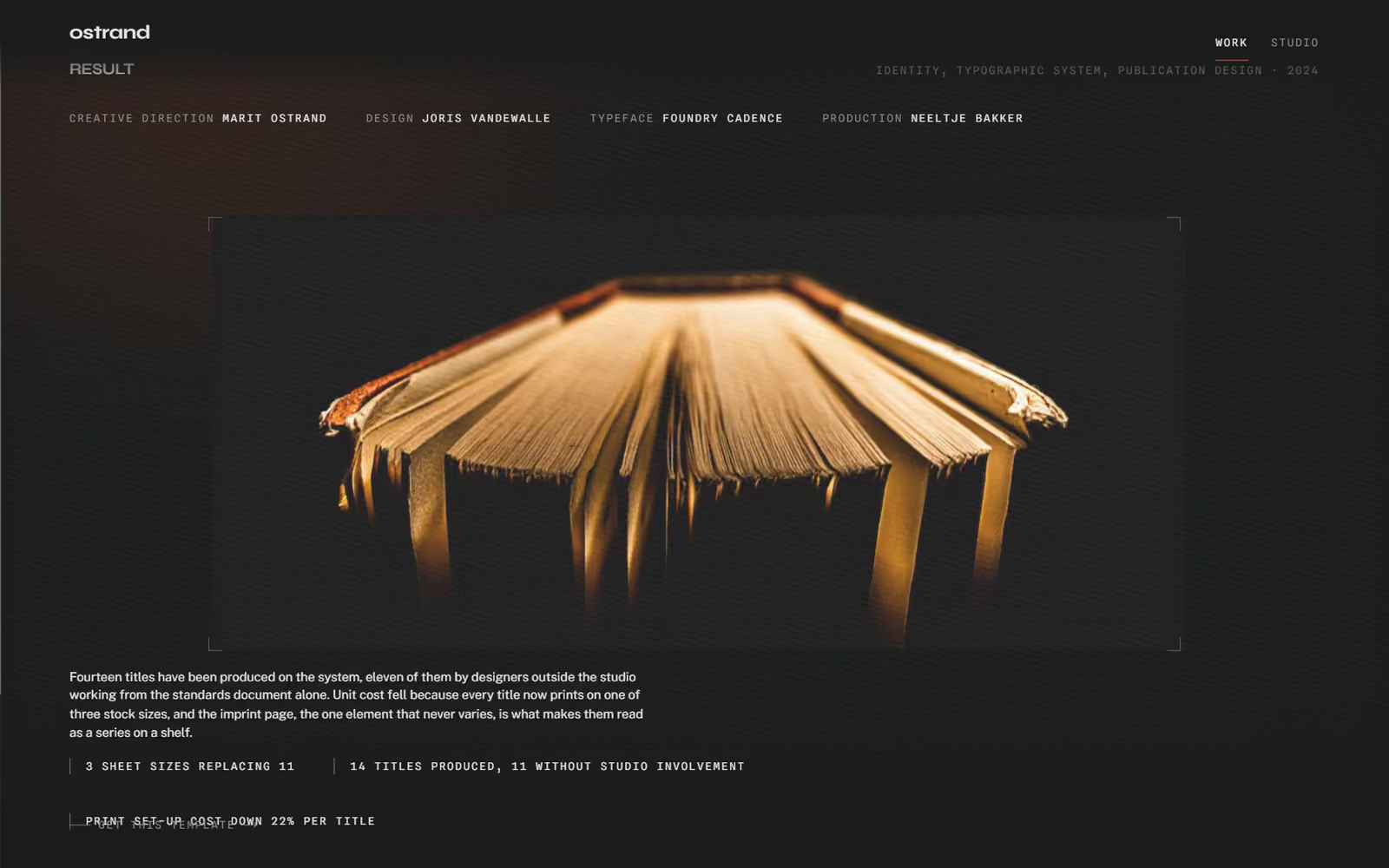
The demonstration photographs show a letterpress workshop, a concert hall and a tidal marsh. None of that is your client's work, so replace it.
From the demo
Specification
- Framework
- Next.js 16 (App Router) · React 19 · TypeScript 5
- Styling
- CSS Modules over one tokens file of six measured colours. No Tailwind
- Output
- Static export. No backend, no CMS, no database
- Pages
- Three page types: home (12 screens), case study (16), studio (5). Three case studies in the demo
- Requires
- Node 20.9 or later · pnpm
- Tested
- 62 unit tests; a gate that measures, from its pixels, whether a photograph is in the frame
- Lighthouse
- Not measured
- Typefaces
- Syne, Public Sans, Spline Sans Mono (SIL OFL 1.1, self-hosted by next/font at build)
- Demo photography
- Twenty-one photographs under the Unsplash License, swapped with one command
- Not included
- A backend, a CMS, a database, a shop. The contact form validates and sends nowhere
Only in Latent
- Graphics
- One canvas in the root layout that never unmounts. No FLIP, no View Transitions, no cross-fade
- Ambient
- Film grain at 12 frames a second, a depth haze and a safelight bleed, all procedural
Changelog
- v1.0.58 Oct 2026Next.js at its September 2026 security release (16.3.8), and the gate on puppeteer-core 25. The pages are unchanged.
- v1.0.420 Aug 2026The gate waits for the frame to settle, so a deployed site is not failed for a picture still decoding.
- v1.0.320 Aug 2026The router's prefetches no longer answer 404 on a static host.
- v1.0.220 Aug 2026Removes a package script whose file was not in the download. Lint stops reading build output.
1 earlier release
- v1.0.120 Aug 2026The frame is no longer empty under reduced motion, and every route gains a real image fallback.
Licence
Standard
$129
One end product. One studio, agency, portfolio or practice website, published for one organisation — including for a paying client, as long as it is one client and one site.
Extended
$299
Unlimited end products for clients of the buyer, with no per-project repurchase. Does not permit reselling Latent itself.